
What you need to know
Your questions about car tax, fines, exemptions and SORN, answered.

Set by CO2 emissions
Set by CO2 emissionsThe more CO2 your car emits, the more you pay. Check the latest rates on GOV.UK.

6 or 12 months
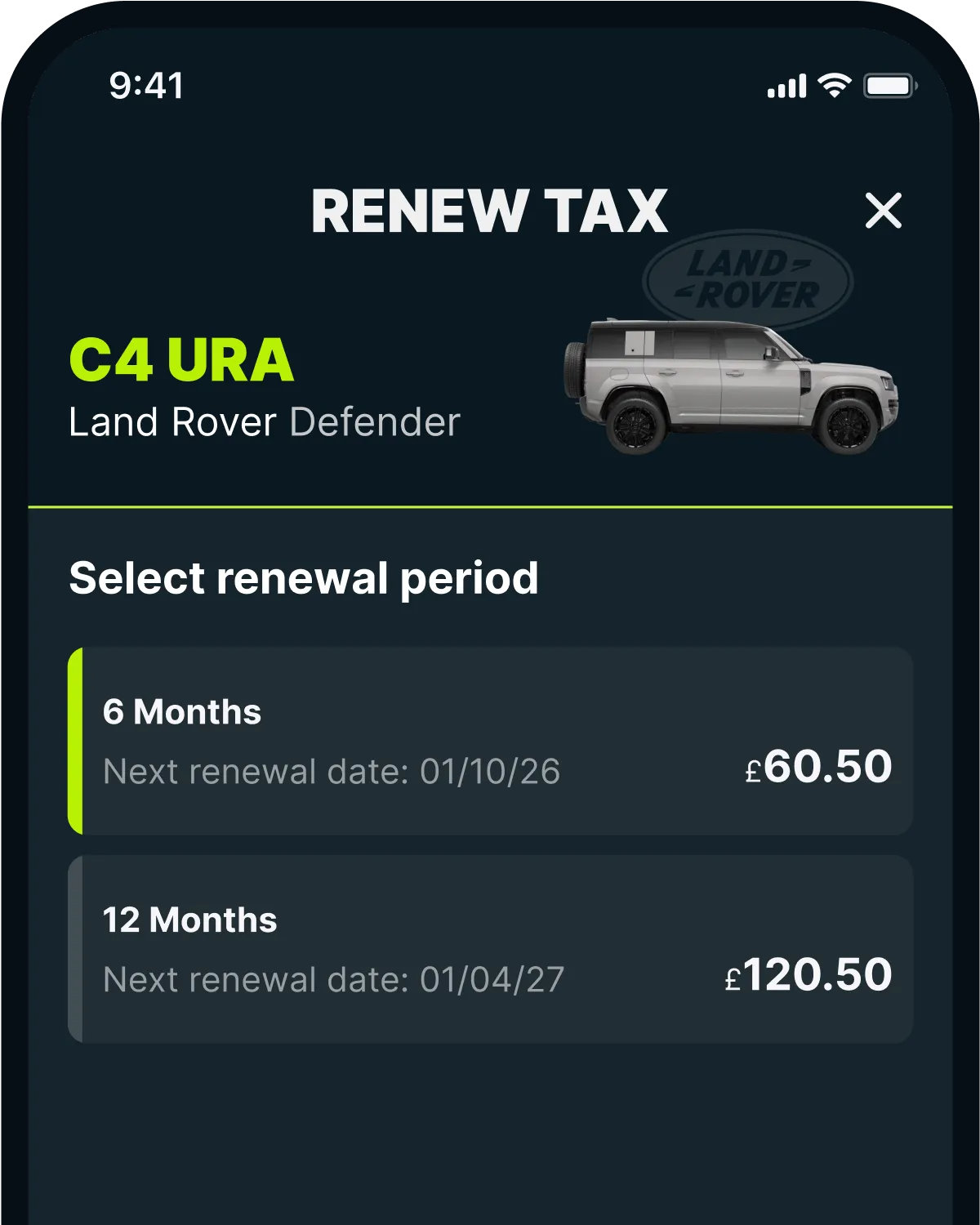
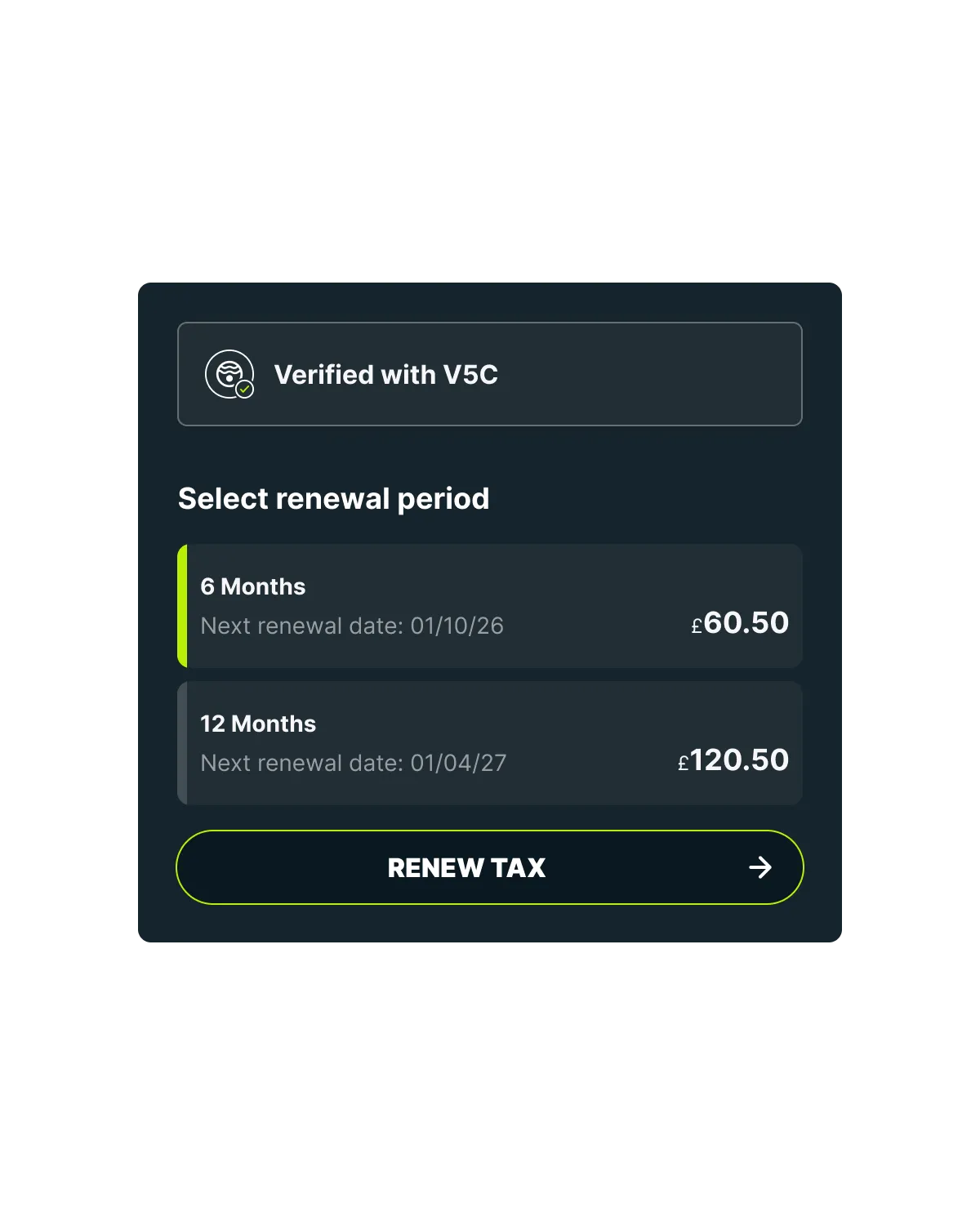
6 or 12 monthsRenew for 6 or 12 months in the app. The DVLA adds a 5% surcharge to monthly and 6-monthly payments.


Exemptions
ExemptionsSome vehicles don't pay, including vehicles used by a disabled person, mobility scooters and historic vehicles. You still need to tax them.
Vehicle tax is tied to the vehicle, not the driver. If you sell your car, you can reclaim a pro-rata amount for the rest of the tax period.
You can pay monthly, every 6 months or every 12 months. The DVLA adds a 5% surcharge if you pay monthly or every 6 months.
Renew your tax in the Caura app
You'll need your V11 reminder or your V5C logbook. Enter the details in the app, choose 6 or 12 months and pay with Apple Pay, Google Pay or a card. It only takes a few seconds.
Caura is regulated by the Financial Conduct Authority (FCA) and works closely with the DVLA, so you can renew with peace of mind.
Get reminded before your tax runs out
Caura syncs with the DVLA and tells you when your tax is about to expire. You'll get an email and an in-app notification in plenty of time, so you don't need to rely on a paper reminder in the post.
Vehicle tax FAQs
What is vehicle tax?
Vehicle tax, also known as VED or Vehicle Excise Duty, is a tax almost every UK driver must pay to drive or park on public roads. Some vehicles are exempt.
It goes into a central government fund. Some of it pays for the UK's roads, including resurfacing, fixing potholes, new roads and route improvements.
How much is vehicle tax?
It depends on your car's CO2 emissions. The more CO2 it emits, the higher the charge.
The government uses a tiered band system. Cars registered before 1 April 2017 use different bands to newer cars. Alternative fuel vehicles have their own rates. The bands favour newer, cleaner cars and put off drivers from owning or leasing high-emission vehicles. Check the latest rates on GOV.UK.
What are the fines for not paying vehicle tax?
The DVLA takes non-payment seriously. You can be given an £80 fine on the spot, reduced to £40 if you pay within 28 days.
If you use an untaxed vehicle on a public road without a SORN, you'll get an out-of-court settlement (OCS) letter. That's a £30 penalty plus one and a half times the tax you owe, so the longer you've driven without tax, the bigger the fine.
Ignore the OCS letter and the penalty could rise to £1,000 or five times the tax owed. Your vehicle is also likely to be clamped.
Using an untaxed vehicle on a public road while it has a SORN costs more. You'll get a £30 penalty plus twice the tax you owe.
Are any vehicles exempt from vehicle tax?
Yes. Owners of these vehicles still need to apply for vehicle tax, but they don't have to pay:
- Vehicles used by a disabled person
- Disabled passenger vehicles, used to transport disabled people
- Mobility scooters and powered wheelchairs with a top speed of 8mph
- Historic vehicles
- Mowing machines designed for cutting grass (not tractors)
- Steam vehicles
What about SORN vehicles?
You can legally own an untaxed vehicle, but it needs to be declared off the road with a Statutory Off Road Notification (SORN). You can apply online.
A SORN vehicle can't be driven or even parked on public roads. You must keep it on private property, like a driveway or garage.
You must register a vehicle as SORN if:
- It isn't legally insured
- You're planning to scrap it for parts
- You've bought it but want to keep it off the road for now
More from Caura
The other charges, tolls and car admin you can sort in the Caura app.