
Here are the 21 things an MOT tester checks on a car. Minor faults won't cause an MOT fail.
- Bonnet: it must close fully and securely
- Tyres and wheels: tyres need a tread depth of at least 1.6mm with no lumps or tears. All wheel nuts must be tight
- Brakes: a brake efficiency test checks they work well. Brake warning lights must work too. If your car pulls to one side when you brake, that's a sign your brakes aren't working properly
- Horn: it must work and be loud enough for other road users to hear
- Exhaust system: it must be secure and free from serious leaks. It must also have the right number of silencers for your car
- Mirrors: they must be secure. A cracked mirror that blocks your view of the road will fail
- Doors: latches, hinges and catches must hold the doors securely closed. Doors must open from inside and outside
- Exhaust emissions: the tester checks the pollution from your engine is within legal limits. Make sure you've got enough fuel in before the test
- Towbar: it's checked for security, condition and any inappropriate repairs
- Boot: it must close securely. Clear out any clutter so the tester can do their checks
- Seats: the driver's seat must adjust and all seats must be fitted securely
- Seatbelts: they must all work properly. Give yours a quick tug to check
- Body and vehicle structure: the tester looks for corrosion and rust. There must be no sharp edges that could cause injury
- Fuel system: it's checked for leaks, serious damage or corrosion
- Steering and suspension: the steering wheel must be secure and is checked for wear or damage. Suspension parts like shock absorbers are checked for damage
- Wipers and washers: they must clear a wide enough area to give you a good view of the road
- Windscreen: there must be no damage larger than 10mm in the driver's view and no damage larger than 40mm elsewhere
- Electrical wiring: sockets and wiring must be free from damage or wear
- Battery: it must be secure with no leaking fluid. Connectors must be secure and free from leaking electrolyte
- Lights: front, rear, brake, fog, reflector and number plate lights must be secure, clearly visible and working
- Registration plates: the plates and VIN must be readable and match your vehicle's documents. Plates must be secure and readable from 20 metres away
What's checked on an MOT for motorcycles?
A motorcycle MOT follows the same structure as a car MOT, with extra checks for bike parts. These are the most important things checked:
- Lights and electricals: headlights, brake lights, indicators and number plate lights, plus the wiring and battery
- Steering and suspension: checked for good condition and wear
- Brakes: checked to make sure they work well and the pads and discs aren't worn
- Tyres and wheels: tyre condition, tread depth and pressure
- Frame and bodywork: checked for damage, rust or corrosion
- Exhaust emissions: checked against legal limits
- Drive chain and sprockets: checked for good condition and wear
- Fuel system: checked for leaks or damage
- Registration plate and VIN: must be readable and match your vehicle's documents
- Seats: the rider's seat must be fitted properly and any other seats fitted securely
- Sidecars: if fitted, they must be attached securely and lined up correctly. Suspension, wheel bearings and tyres are checked too
- Horn: must be fitted correctly and suitable for the bike
- Throttle: checked to make sure it works properly
- Clutch lever: mustn't be bent, damaged or shortened
- Footrests: must be fitted securely
What counts as an MOT fail?
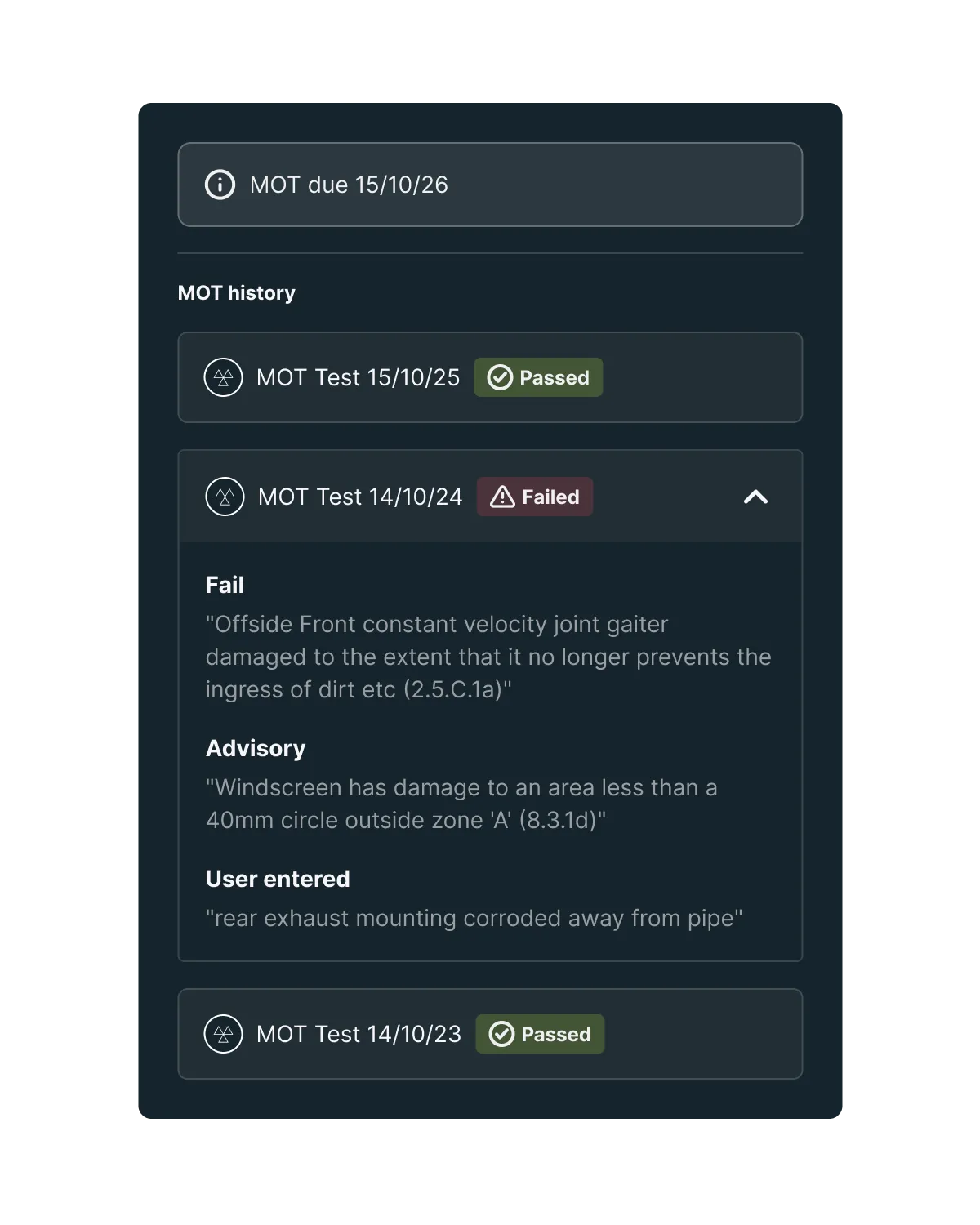
If your vehicle passes, you'll get an MOT pass certificate that's valid for 12 months. If it fails, you'll get a list of repairs to make before it can be retested.
There are three types of MOT fault.
Minor faults
These are listed as advisories on your MOT certificate. Minor faults alone can't fail your MOT, but get them fixed as soon as you can to avoid problems later.
Major faults
These fail your MOT, but you can still drive your vehicle to a garage for repairs.
Dangerous faults
These fail your MOT and you can't drive your vehicle at all until the repairs are done.
Top tip: watch out for garages adding advisories you could easily fix yourself. Don't be afraid to question advisories you don't agree with. Only authorise work you think really needs doing.
The most common reasons for failing an MOT
These are the 11 most common reasons vehicles fail:
- Faulty headlights, reflectors or electrical equipment
- Unstable suspension
- Faulty brakes
- Tyre tread that's too low
- A cracked windscreen or wipers that block your view of the road
- Loose bodywork or structure
- Exhaust problems
- Low steering fluid
- Faulty seatbelts or airbags
- A damaged registration plate
- Indicator lights that don't work
If the tester finds any major or dangerous faults, your vehicle fails and needs repairs before it can be driven. Find out more about MOT test results and what causes a fail.
Nine MOT pre-checks you can do yourself
Failing an MOT can cost you time and money. These nine pre-checks cut the risk:
- Lights and electricals: check every light, including headlights, brake lights, indicators and number plate lights. Replace any bulbs that don't work and make sure the wiring isn't damaged
- Tyres and wheels: check your tyres' condition and tread depth. Make sure they're at the right pressure. Check the wheels aren't damaged or buckled
- Brakes: test your brakes to make sure they work well and the pads and discs aren't worn. If you hear odd noises or the brakes feel spongy, get a mechanic to check them
- Suspension and steering: check they're in good condition and not worn
- Windscreen and wipers: look for damage or cracks and replace anything that needs it. Make sure the wipers work and aren't damaged
- Fluids: check the oil, brake fluid, power steering fluid and coolant. Top up anything that's low
- Exhaust: look for leaks or damage and replace any damaged or rusted sections
- Bodywork: look for damage, rust or corrosion and repair it before the test
- Registration plate and VIN: make sure they're readable and match your vehicle's documents
For more, work through our complete MOT checklist before your test. These checks don't replace a professional MOT, so you'll still need a qualified tester to inspect your vehicle.
More from Caura
The other charges, tolls and car admin you can sort in the Caura app.