MOT
The importance of an engine coolant to keep your car running
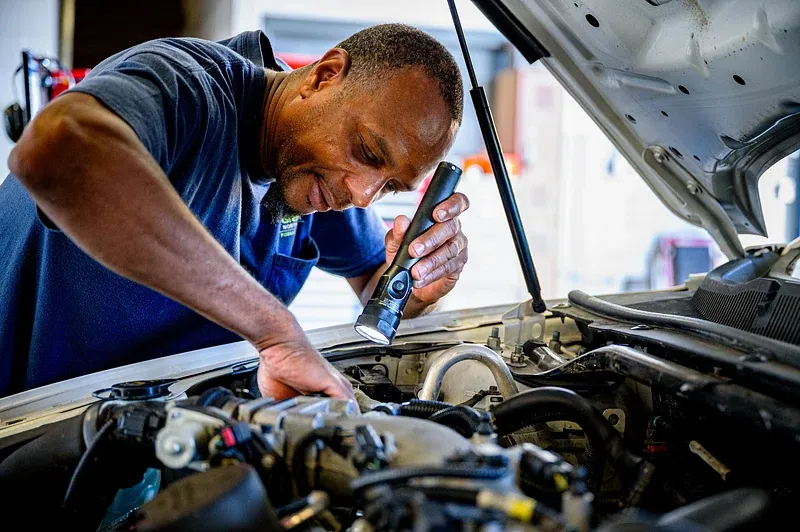
There are several factors that allow the engine to work properly, one of which is engine coolant, but what you should you do when the engine coolant symbol turns on?
Understanding all of your vehicle's various systems and mechanisms can feel overwhelming, but we're here to help you make sense of it.
In this blog, we'll explore the role of engine coolant, what to do when the engine coolant light turns on or start flashing, and how to top up your engine coolant.
What is engine coolant?
Let's start with the basics. Engine coolant, also known as antifreeze coolant, is a vital part of your car's cooling system. Its primary role is to absorb the immense heat produced by the engine and prevent the engine from overheating. Engine coolant’s antifreeze properties also help to prevent the water in your engine from freezing during colder months. This is very important because frozen water could lead to significant engine damage.
So, in essence, car coolant helps maintain optimal engine temperature, promoting efficient performance and extending the lifespan of your vehicle.
What to do when the engine coolant light turns on
The engine coolant symbol on your dashboard is a direct communication between your vehicle's cooling system and you. If the engine coolant light turns on while you're driving or is flashing, it's generally signalling that your engine could be at risk of overheating. This could be due to low coolant levels or a malfunctioning component within the cooling system.
Firstly, don't panic. If it's safe to do so, pull over and switch off your engine to allow it to cool down. Avoid opening the hood immediately as the components underneath may be extremely hot. Once the engine has cooled down, check your coolant level.
How to check if coolant level is low
Checking your car's coolant level is a relatively simple task that you can perform yourself.
Firstly, never check the coolant level when the engine is hot. Coolant can become extremely hot and it can cause severe burns if the radiator cap is removed while the engine and the coolant are still hot. Always check the coolant level when the engine is cold or has been sitting for several hours.
Here's a step-by-step guide on how to check if your coolant level is low:
- Prepare your vehicle: ensure your car is on a level surface and that the engine is cool. This will give you the most accurate reading of your coolant level
- Locate the coolant reservoir: your coolant reservoir is usually a semi-transparent plastic container located under the hood of your car. If you're unsure where the coolant reservoir is, refer to your vehicle's owner's manual for its exact location
- Check the coolant level: there will be markings on the side of the coolant reservoir indicating the minimum and maximum levels. If the liquid reaches below the minimum mark, you'll need to add more coolant
- Check for signs of a leak: if the coolant level is significantly low or seems to be consistently decreasing, you might have a leak. Look for any signs of leakage inside the hood and under the car
If you determine that the coolant level is low, you can top it up yourself. However, if you suspect a leak or if the coolant level decreases rapidly, you should have your car inspected by a professional mechanic. Download Caura and book into a high-quality garage near you.
How to top up engine coolant
Before we dive into how to top up your engine coolant, you need to correctly identify the right coolant for your vehicle.
The general rule of thumb is:
- Cars made after 1998 require a coolant that uses silicate-free, Organic Acid Technology (OAT)
- Cars made before 1998 need a coolant that isn’t OAT-based and does contain silicate
Your owner’s manual will clearly tell you what type of engine coolant your vehicle needs.
Once you have the right coolant, simply open the reservoir cap, and pour the coolant up till the marked line.
If the light is still on after you’ve topped up the engine coolant, it’s time to get your car checked by a professional mechanic.